Die Angriffsfläche erklärt: Die Risiken für Ihr Unternehmen verstehen und minimieren
Wichtige Erkenntnisse
Eine Angriffsfläche ist die Gesamtheit aller Zugangspunkte, über die ein Angreifer versuchen kann, auf Ihre Umgebung zuzugreifen, diese zu stören oder Daten daraus zu entwenden – so definiert vom NIST in mehreren Sonderveröffentlichungen.
Vier Arten von Angriffsflächen erfordern unterschiedliche Vorgehensweisen. Die digitale, die physische, die Social-Engineering- und die sich abzeichnende KI-Angriffsfläche erfordern jeweils unterschiedliche Erkennungs- und Überwachungsmethoden.
Edge-Geräte stellen das am schnellsten wachsende Risiko dar. Der Verizon DBIR 2025 ergab, dass 22 % der Sicherheitsverletzungen durch Exploits auf die Edge-Infrastruktur abzielten – eine Verachtfachung gegenüber dem Vorjahr.
Das Management der Angriffsfläche ist mittlerweile eine unverzichtbare Voraussetzung für die Einhaltung von Vorschriften. Rahmenwerke wie NIST CSF, CIS Controls v8, ISO 27001 und NIS2 schreiben durchweg eine Bestandsaufnahme der Ressourcen, die Überwachung der Sicherheitsrisiken sowie Maßnahmen zu deren Reduzierung vor.
Jedes vernetzte Gerät, jede vergessene API und jedes Dienstkonto mit übermäßigen Berechtigungen stellt einen weiteren potenziellen Angriffspunkt für Angreifer dar. Die digitale Angriffsfläche ist seit 2022 um 67 % gewachsen, was vor allem auf cloud , die zunehmende Verbreitung des Internets der Dinge (IoT) und den Einsatz von KI-Tools zurückzuführen ist. Unterdessen hat eine Untersuchung von Unit 42 ergeben, dass 87 % aller Angriffe mittlerweile mehrere Angriffsflächen umfassen, was bedeutet, dass eine einzige unkontrollierte Sicherheitslücke zu einem unternehmensweiten Vorfall führen kann. Dieser Leitfaden erläutert, was eine Angriffsfläche ist, welche vier Arten von Angriffsflächen Sicherheitsteams überwachen müssen und wie sich das Risiko mithilfe bewährter Frameworks und praktischer Erfahrungen systematisch reduzieren lässt.
Was ist eine Angriffsfläche?
Eine Angriffsfläche ist die Gesamtheit aller Punkte an der Grenze eines Systems, eines Systemelements oder einer Umgebung, an denen ein Angreifer versuchen kann, in das System einzudringen, dort Auswirkungen zu erzielen oder Daten zu entwenden. Diese Definition, die sich auf NIST SP 800-53 Rev. 5 und SP 800-160 Vol. 2 stützt, dient als maßgeblicher Bezugspunkt für die Sichtweise von Sicherheitsexperten auf Sicherheitsrisiken.
Praktisch gesehen endpoint jeder offene Port, jede cloud , jeder Benutzerzugang und jeder endpoint zur Angriffsfläche eines Unternehmens endpoint . Dieses Konzept ist von Bedeutung, da die Angriffsfläche dramatisch gewachsen ist. Untersuchungen aus der Cybersicherheitsprognose 2026 des INE zeigen, dass sich die digitale Angriffsfläche seit 2022 um 67 % vergrößert hat, da Unternehmen cloud eingeführt, IoT-Geräte bereitgestellt und KI-Tools integriert haben. Der Global Incident Response Report 2026 von Unit 42 bestätigt, dass 87 % der Angriffe mittlerweile mehrere Angriffsflächen umfassen, was eine einheitliche Transparenz zu einer Voraussetzung für eine effektive Erkennung von Bedrohungen macht.
Es steht viel auf dem Spiel. Data Breach „Cost of a Data Breach 2025“ des Ponemon Institute ergab, dass die durchschnittlichen Kosten einer Datenpanne weltweit 4,44 Millionen US-Dollar erreichten, wobei der Durchschnitt in den USA auf 10,22 Millionen US-Dollar stieg. Jede nicht verwaltete Komponente der Angriffsfläche stellt einen potenziellen Weg zu diesen Zahlen dar.
Angriffsfläche vs. Angriffsvektor
Eine Angriffsfläche und ein Angriffsvektor sind miteinander verbundene, aber unterschiedliche Konzepte. Die Angriffsfläche umfasst die Gesamtheit aller möglichen Angriffspunkte. Ein Angriffsvektor ist die konkrete Methode, mit der ein Angreifer einen dieser Angriffspunkte ausnutzt.
Stellen Sie sich das so vor: Die Angriffsfläche umfasst alle Türen, Fenster und Lüftungsöffnungen eines Gebäudes. Ein Angriffsvektor ist das konkrete Fenster, das sich ein Einbrecher aussucht, sowie die Technik, mit der er es öffnet. Gängige Techniken für Cyberangriffe – phishing, Ausnutzung von Sicherheitslücken, Missbrauch von Zugangsdaten – sind Angriffsvektoren, die auf bestimmte Komponenten der gesamten Angriffsfläche abzielen.
Dieses Verständnis hilft Sicherheitsteams dabei, Prioritäten zu setzen. Durch die Verringerung der Angriffsfläche wird die Anzahl der verfügbaren Angriffswege eingeschränkt. Durch die Überwachung der Angriffsvektoren lässt sich erkennen, welche Wege Angreifer aktiv nutzen.
Arten von Angriffsflächen
Angriffsflächen lassen sich in vier Kategorien einteilen, die jeweils unterschiedliche Ansätze zur Erkennung und Überwachung erfordern. Die folgende Tabelle fasst die wichtigsten Komponenten, Beispielangriffe und Erkennungsmethoden für jede Kategorie zusammen.
Tabelle: Vier Arten von Angriffsflächen mit ihren wichtigsten Komponenten und Erkennungsansätzen.
Typ
Wichtige Komponenten
Beispiel für einen Angriff
Entdeckungsmethode
Digital
Offene Ports, APIs, cloud , nicht gepatchte Software, Schatten-IT, Datenbanken
Ausnutzung einer öffentlich zugänglichen Anwendung (T1190)
Automatisierte Erkennung von Systemressourcen, Schwachstellen-Scans, Verwaltung der cloud lage
Einstecken eines nicht autorisierten USB-Geräts an einem unbeaufsichtigten Arbeitsplatz
Prüfungen der physischen Sicherheit, Überprüfung der Zugangskontrolle, Überwachung der Einrichtungen
Social Engineering
Mitarbeiter, Auftragnehmer und Partner, die für Manipulationen anfällig sind
phishing -Kampagne, die auf die Zugangsdaten des Finanzteams abzielt
Schulungen zur Sensibilisierung für Sicherheitsfragen, phishing , Verhaltensanalysen
KI (im Entstehen begriffen)
KI-Modelle, Trainingsdaten, Prompt-Schnittstellen, Identitäten von KI-Agenten, API-Endpunkte
Prompt injection , bei dem sensible Daten aus einem LLM-basierten Assistenten extrahiert werden
Bestandsaufnahme von KI-Modellen, Testen von Prompts, Verwaltung der Agentenidentitäten
Digitale Angriffsfläche
Die digitale Angriffsfläche ist die größte und am schnellsten wachsende Kategorie. Sie umfasst alle Software-, Hardware- und Netzwerkressourcen, die potenziellen Angriffen ausgesetzt sind – offene Ports, falsch konfigurierte cloud , nicht gepatchte Endgeräte, Schatten-IT-Anwendungen und APIs. Cloud Angriffe stiegen im Jahr 2025 um 37 %, wobei staatlich geförderte Akteure einen Anstieg von 266 % verursachten, was unterstreicht, dass cloud ein entscheidender Aspekt der digitalen Angriffsfläche ist. Laut dem Cloudflare-Bericht zur Anwendungssicherheit 2026 stieg die API-Nutzung um 167 % und fügte damit einen weiteren, schnell wachsenden Angriffsvektor hinzu.
Da die Zahl der vernetzten IoT-Geräte bis 2026 voraussichtlich 25 Milliarden überschreiten wird, erstreckt sich die digitale Angriffsfläche tief in die Betriebsumgebungen hinein. Unternehmen, die industrielle Steuerungssysteme, medizinische Geräte oder die Infrastruktur intelligenter Gebäude verwalten, stehen vor IoT-Sicherheitsherausforderungen, die die Grenze zwischen digitalen und physischen Angriffsflächen verwischen. Hybride Umgebungen, die lokale Rechenzentren und mehrere cloud umfassen, erfordern hybride cloud , die den gesamten digitalen Fußabdruck berücksichtigen.
Angriffsfläche für Social-Engineering-Angriffe
Der Faktor Mensch stellt nach wie vor eine ständige Angriffsfläche dar. Mitarbeiter, Auftragnehmer und Partner können durch phishing, Pretexting und Baiting dazu gebracht werden, Zugangsdaten preiszugeben oder böswillige Handlungen auszuführen. Eine eingehendere Betrachtung dieser Techniken und Abwehrmaßnahmen finden Sie in unserem Leitfaden zum Thema Social Engineering.
KI als neue Angriffsfläche
KI stellt eine vierte Kategorie von Angriffsflächen dar, die die meisten Unternehmen noch nicht erfasst haben. Laut Branchenumfragen nennen 48 Prozent der Cybersicherheitsexperten autonome KI-Agenten als den am schnellsten wachsenden Angriffsvektor für das Jahr 2026. Die im Dezember 2025 veröffentlichten „OWASP Top 10 für die Sicherheit agentischer KI“ identifizieren Risiken wie prompt injection, übermäßige Eigenständigkeit und unsichere Tool-Nutzung.
„Shadow AI“ verschärft diese Herausforderung noch. Wenn Mitarbeiter KI-Tools ohne IT-Aufsicht einsetzen, führt jedes Tool zu unkontrollierten Modell-Endpunkten, Datenflüssen und API-Verbindungen. Die Identitäten von KI-Agenten – Dienstkonten, die es autonomen KI-Systemen ermöglichen, im Namen der Benutzer zu handeln – schaffen Anmeldeketten, die von der herkömmlichen Identitätsverwaltung nicht abgedeckt werden. Im Juni 2023 wurden durch eine fehlerhaft konfigurierte KI-Forschungsumgebung bei einem großen Technologieunternehmen versehentlich 38 Terabyte an internen Daten offengelegt, was verdeutlicht, wie KI-Infrastrukturen neue Sicherheitsrisiken schaffen.
Identität als Querschnittsthema
Identitäten ziehen sich durch alle vier Arten von Angriffsflächen. Anmeldedaten, Dienstkonten, OAuth-Token, API-Schlüssel und Identitäten von KI-Agenten bilden eine Angriffsfläche, die unabhängig davon besteht, ob die zugrunde liegende Infrastruktur digital, physisch oder KI-gesteuert ist. Der „2026 Global Threat Intelligence Report“ von Flashpoint stellte fest, dass 3,3 Milliarden kompromittierte Anmeldedaten von 11,1 Millionen mit Infostealern infizierten Rechnern im Umlauf sind. Fähigkeiten zur Erkennung und Reaktion auf Identitätsbedrohungen sind für Unternehmen, bei denen die Identität die primäre Angriffsfläche darstellt, unverzichtbar geworden.
Angriffsflächen in der Praxis
Vorfälle aus der Praxis zeigen immer wieder, dass nicht verwaltete oder unbekannte Komponenten der Angriffsfläche die Hauptzugangspunkte für schwerwiegende Vorfälle sind. Diese Fallstudien veranschaulichen dieses Muster.
Anstieg der Angriffe auf Edge-Geräte. Laut dem Verizon DBIR 2025 richteten sich 22 % aller Sicherheitsverletzungen durch die Ausnutzung von Schwachstellen gegen die Edge-Infrastruktur – Firewalls, VPNs, Router und Fernzugriffsgateways –, was einem achtfachen Anstieg gegenüber dem Vorjahr entspricht. Die mittlere Behebungszeit betrug 32 Tage, und nur 54 % der anfälligen Geräte wurden vollständig behoben. Die im Februar 2026 veröffentlichte CISA-Richtlinie BOD 26-02 schreibt nun die Bestandsaufnahme von Edge-Geräten und die Außerbetriebnahme von Geräten, deren Support ausgelaufen ist, innerhalb bestimmter Fristen vor.
Die Lieferkette als Angriffsfläche. Laut dem Verizon DBIR war die Beteiligung von Drittanbietern im Jahr 2025 bei 30 % aller Sicherheitsverletzungen ein Faktor, gegenüber etwa 15 % im Vorjahr. Durch die SolarWinds-Sicherheitsverletzung (2020) wurden über 18.000 Kundenunternehmen durch ein einziges Anbieter-Update kompromittiert. Die MOVEit-Sicherheitslücke (2023) betraf mehr als 620 Unternehmen durch einen zero-day einer Dateiübertragungssoftware. Beide Fälle veranschaulichen, wie eine einzige Abhängigkeit von Drittanbietern die Angriffsfläche exponentiell vergrößert.
Sicherheitsvorfall bei Jaguar Land Rover. Im August 2025 nutzten Angreifer eine Sicherheitslücke bei einem Zulieferer von Jaguar Land Rover aus, wodurch die Produktion für fünf Wochen zum Erliegen kam und mehr als 5.000 Unternehmen in der Lieferkette betroffen waren. Die Kosten des Vorfalls werden auf 1,9 Milliarden Pfund geschätzt.
Massiver Diebstahl von Zugangsdaten. Bei der Datenpanne bei Prosper Marketplace im Jahr 2025 wurden 17,6 Millionen Datensätze mit personenbezogenen Daten offengelegt, nachdem Administratorzugangsdaten mit übermäßigen Datenbankberechtigungen gestohlen worden waren – ein Paradebeispiel für den Diebstahl von Zugangsdaten in Verbindung mit unzureichenden Zugriffskontrollen.
DieSalt Typhoon . Eine mit China in Verbindung stehende Hackergruppe nutzt weiterhin Edge-Netzwerkgeräte in 200 bis 600 Organisationen in über 80 Ländern aus, wobei das FBI bestätigt, dass die Bedrohung „nach wie vor sehr aktuell“ ist. Diese Kampagne macht deutlich, dass staatliche Akteure systematisch die Angriffsfläche kritischer Infrastrukturen ins Visier nehmen.
Verwaltung Ihrer Angriffsfläche
Das Attack Surface Management (ASM) ist ein kontinuierlicher Prozess, bei dem die Angriffsfläche eines Unternehmens ermittelt, analysiert, überwacht und reduziert wird. Im Gegensatz zu regelmäßigen Schwachstellen-Scans geht das ASM davon aus, dass sich die Angriffsfläche ständig verändert und eine kontinuierliche Überwachung erfordert.
Der ASM-Markt spiegelt diese Dringlichkeit wider. Mit einem Marktvolumen von 1,03 Milliarden US-Dollar im Jahr 2025 wird erwartet, dass er bis 2034 bei einer durchschnittlichen jährlichen Wachstumsrate (CAGR) von 21 % die 5-Milliarden-Dollar-Marke überschreiten wird. Laut der Umfrage „IT Priorities 2026“ von Flexera sehen 85 % der IT-Entscheidungsträger Lücken in der Transparenz als erhebliches Risiko an.
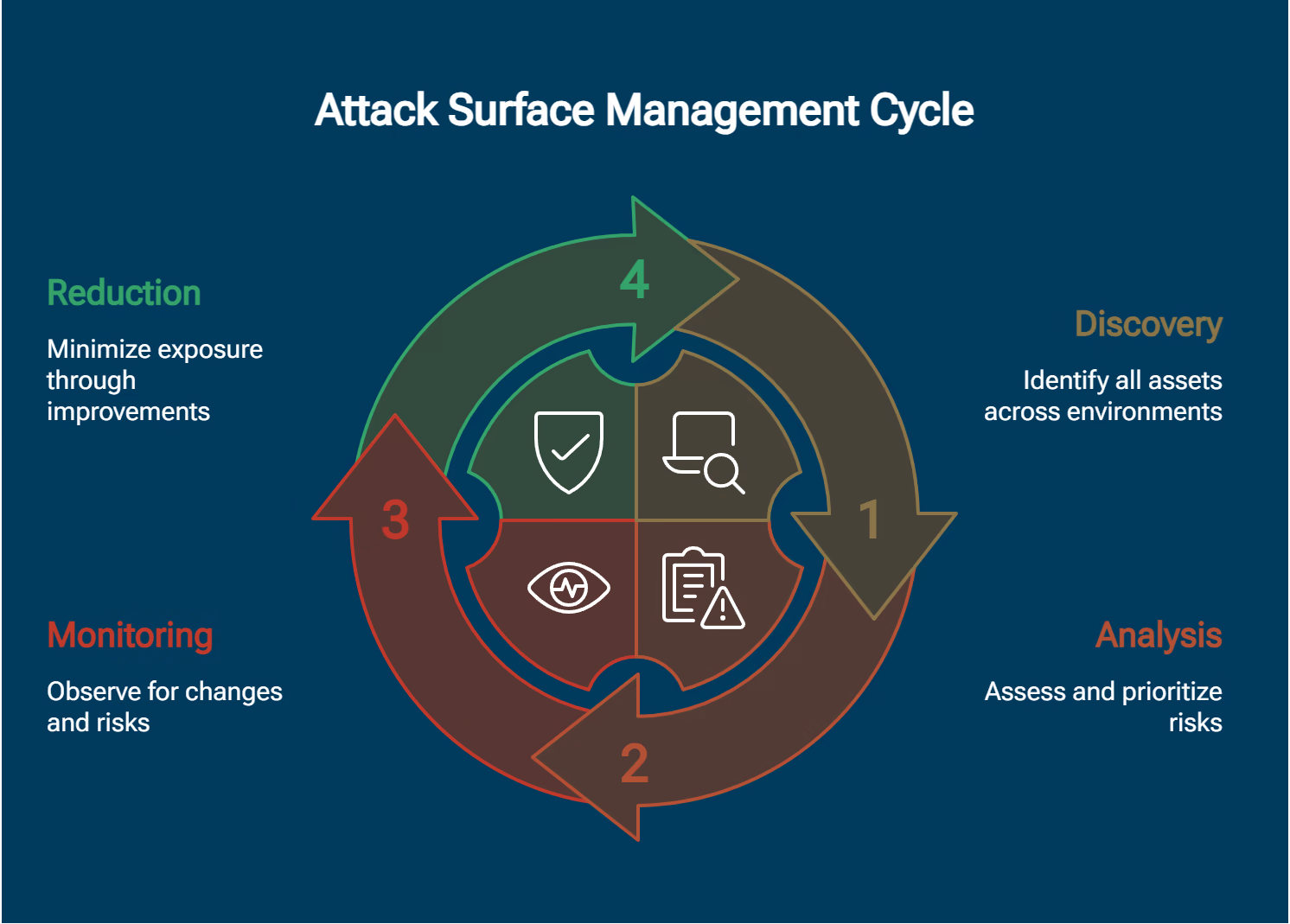
Der Lebenszyklus des Angriffsflächenmanagements
ASM folgt einem kontinuierlichen Lebenszyklus, der aus vier Phasen besteht.
Erfassung. Erfassen Sie alle Ressourcen – vor Ort, cloud, als SaaS, Schatten-IT sowie Verbindungen zu Drittanbietern. Das External Attack Surface Management (EASM) konzentriert sich speziell auf internetgestützte Ressourcen, die für externe Angreifer sichtbar sind.
Überwachung. Halten Sie die Angriffsfläche kontinuierlich im Blick. Cloud verändern sich schneller als lokale Infrastrukturen, und 90 % aller Vorfälle sind auf Fehlkonfigurationen zurückzuführen, die jederzeit auftreten können (Unit 42, 2026).
Reduzierung. Beseitigen Sie unnötige Sicherheitsrisiken systematisch durch das Installieren von Patches, die Außerbetriebnahme von Systemen, Sicherheitshärtung und Zugriffskontrollen. Diese Phase mündet direkt in den nächsten Erfassungszyklus.
ASM unterscheidet sich vom Schwachstellenmanagement hinsichtlich seines Anwendungsbereichs. Das Schwachstellenmanagement konzentriert sich auf bekannte Ressourcen und bekannte Sicherheitslücken (CVEs). ASM ist eine übergeordnete Lösung, die die Erkennung von Ressourcen – also das Aufspüren von Ressourcen, von deren Existenz man nichts wusste – sowie die kontinuierliche Überwachung der gesamten Angriffsfläche umfasst.
Wie CTEM mit dem Angriffsflächenmanagement zusammenhängt
Continuous Threat Exposure Management (CTEM) ist ein von Gartner definiertes Rahmenwerk, das ASM zu einem umfassenderen Programm zum Risikomanagement erweitert. Gartner geht davon aus, dass Unternehmen, die CTEM Priorität einräumen, dreimal seltener Opfer einer Sicherheitsverletzung werden, und 60 % der Unternehmen verfolgen bereits CTEM-Programme oder erwägen deren Einführung.
CTEM folgt einem fünfstufigen Lebenszyklus.
Umfang. Definieren Sie die geschäftskritischen Ressourcen und Prozesse, die am wichtigsten sind.
Ermittlung. Erfassen Sie die Angriffsfläche – wobei ASM die Grundlage bildet.
Priorisierung. Ordnen Sie Sicherheitslücken nach ihrer Ausnutzbarkeit und ihren geschäftlichen Auswirkungen, nicht nur nach CVSS-Werten.
Validierung. Überprüfen Sie durch Angriffssimulationen, ob Sicherheitslücken tatsächlich ausgenutzt werden können.
Umsetzung. Umsetzung der Ergebnisse in Sanierungsabläufe und Rechenschaftspflichten.
ASM speist direkt in die Erkennungs- und Priorisierungsphasen von CTEM ein und liefert die Rohdaten zu Bestand und Reichweite, die das übergeordnete Programm für seinen Betrieb benötigt.
Verringerung Ihrer Angriffsfläche
Die Reduzierung der Angriffsfläche erfordert eine kontinuierliche Bestandsaufnahme der Ressourcen, risikobasierte Abhilfemaßnahmen, die Entfernung nicht genutzter Dienste sowie ein konsequentes Identitätsmanagement in allen Umgebungen. Die folgende Checkliste bietet eine praktische Methode zur Bestandsaufnahme auf der Grundlage des OWASP-Frameworks zur Analyse der Angriffsfläche.
Tabelle: Praktische Checkliste zur Erfassung der Angriffsfläche für Sicherheitsteams.
Phase
Kernaktivitäten
Werkzeuge und Methoden
Ausgabe
1. Bestandsaufnahme der Vermögenswerte
Alle Hardware-, Software- und cloud auflisten
CMDB, APIs cloud , Netzwerkscanner
Umfassendes Anlagenverzeichnis
2. Netzwerkkartierung
Offene Ports, Dienste und Netzwerkpfade ermitteln
Port-Scanner, Tools zur Netzwerktopologie, Datenflussanalyse
Netzwerk-Risikokarte
3. Identitätskatalogisierung
Erfassen Sie alle Konten von Mitarbeitern, Dienstleistern und KI-Agenten
Entfernung nicht genutzter Funktionen und Dienste, um die minimale Funktionalität sicherzustellen.
Überwachung von Drittanbietern und der Lieferkette mit kontinuierlicher Risikobewertung der Lieferanten.
Cloud und Konfigurationsmanagement zur Behebung der 90 % aller Vorfälle, die auf Fehlkonfigurationen zurückzuführen sind.
Kontrollen für die Identitäts- und Zugriffsverwaltung, einschließlich des Prinzips der geringsten Berechtigungen und zero trust , verstärkt durch Multi-Faktor-Authentifizierung.
Netzwerksegmentierung zur Eindämmung lateraler Bewegungen, wenn Angreifer die Perimeterabwehr durchbrechen.
Angriffsfläche und Compliance
Das Management der Angriffsfläche entspricht direkt den Anforderungen der wichtigsten Sicherheitsrahmenwerke und ist daher sowohl aus Sicherheits- als auch aus Compliance-Gründen unerlässlich.
Tabelle: Vergleich der Compliance-Anforderungen hinsichtlich der Angriffsfläche in den wichtigsten Sicherheits-Frameworks.
Risikobewertungen, Bestandsaufnahme der Vermögenswerte, Sicherheit der Lieferkette, Kryptografie
Die NIS2 schreibt eine kontinuierliche Risikobewertung und ein kontinuierliches Asset-Management vor
ASM implementieren, um die NIS2-Anforderungen zu erfüllen, die ab 2026 uneingeschränkt gelten
DORA
Risikokartierung, Priorisierung von Schwachstellen
Finanzinstitute müssen ASM-Verfahren einhalten
Die digitale operative Widerstandsfähigkeit den ASM-Ergebnissen zuordnen
Moderne Ansätze für das Angriffsflächenmanagement
Die Landschaft im Bereich Attack Surface Management entwickelt sich von der periodischen Erfassung hin zu einer kontinuierlichen, KI-gestützten Überprüfung von Sicherheitslücken. Die Übernahme von Armis durch ServiceNow im Dezember 2025 für 7,75 Milliarden US-Dollar signalisiert, dass sich der Markt von Nischen-Tools hin zu Investitionen in Unternehmensplattformen verlagert hat. Der GigaOm ASM Radar 2026 bewertete 32 Anbieter und kam zu dem Schluss, dass „die Erfassung mittlerweile eine Grundvoraussetzung ist“ und dass das validierte Management von Sicherheitslücken die neue Messlatte für den Wettbewerb darstellt.
Drei Ansätze prägen den modernen Ansatz.
Von periodisch zu kontinuierlich. Herkömmliche vierteljährliche Scans können mit cloud nicht Schritt halten, in denen Ressourcen innerhalb von Minuten hoch- und heruntergefahren werden. Eine kontinuierliche Überwachung der Angriffsfläche ist mittlerweile zur Grundvoraussetzung geworden.
Von isoliert zu einheitlich. Da 87 % aller Angriffe mehrere Angriffsflächen betreffen, benötigen Unternehmen einen umfassenden Überblick über Netzwerk, Identitäten, cloud und endpoint einer einzigen Ansicht. Netzwerküberwachung und -reaktion, cloud und -Reaktion sowie die Erkennung von Identitätsbedrohungen müssen zusammengeführt werden, um die gesamte Angriffsfläche abzudecken.
Von der Erkennung bis zur Umsetzung. Zu wissen, welche Sicherheitslücken bestehen, ist notwendig, reicht aber nicht aus. Moderne Ansätze schließen die Lücke zwischen der Identifizierung einer Sicherheitslücke und deren Behebung durch automatisierte Priorisierung und die Integration in betriebliche Arbeitsabläufe.
Wie Vectra AI die Transparenz der Angriffsfläche Vectra AI
Die Philosophie Vectra AI basiert auf einer grundlegenden Prämisse: Das moderne Netzwerk IST die Angriffsfläche. Es umfasst lokale Rechenzentren,cloud , Identitätssysteme, SaaS-Anwendungen, IoT-/OT-Geräte, Edge-Infrastruktur und KI-Tools. Anstatt zu versuchen, jeden möglichen Einstiegspunkt zu eliminieren – eine unmögliche Aufgabe in einem dynamischen Unternehmen –, Vectra AI auf Attack Signal Intelligence Angreifer Attack Signal Intelligence erkennen, die bereits in die Angriffsfläche eingedrungen sind. Dieser Ansatz ermöglicht die verhaltensbasierte Erkennung von Angreifertechniken in jeder Phase der Kill Chain und bietet über die Vectra AI Abdeckung, Transparenz und Kontrolle über die gesamte moderne Angriffsfläche hinweg.
Schlussfolgerung
Die Angriffsfläche ist nicht mehr nur eine statische Bestandsaufnahme, die einmal pro Quartal überprüft wird. Sie ist eine dynamische, vielschichtige Herausforderung, die sich über die digitale Infrastruktur, physische Einrichtungen, menschliches Verhalten und KI-Systeme erstreckt. Angesichts eines Anstiegs der digitalen Angriffsfläche um 67 % seit 2022 und der Tatsache, dass 87 % aller Angriffe mehrere Arten von Angriffsflächen betreffen, sind diejenigen Unternehmen erfolgreich, die das Management der Angriffsfläche als kontinuierlichen, automatisierten Prozess betrachten – und nicht als eine Aufgabe, die nur in regelmäßigen Abständen abgehakt wird.
Der Weg nach vorn beginnt mit Transparenz. Ermitteln Sie, worüber Sie verfügen, analysieren Sie, wo Schwachstellen bestehen, überwachen Sie kontinuierlich alle Veränderungen und reduzieren Sie alles, was nicht notwendig ist. Ordnen Sie Ihre Maßnahmen Rahmenwerken wie dem NIST CSF und den CIS Controls zu, um sowohl Sicherheits- als auch Compliance-Ziele zu erfüllen. Und machen Sie sich bewusst: In einer Welt, in der clevere Angreifer immer einen Weg finden, sich Zugang zu verschaffen, sind Erkennung und Reaktion über die gesamte Angriffsfläche hinweg entscheidend dafür, dass aus einem Angriffsversuch ein eingedämmter Vorfall wird.
Erfahren Sie, wie die Plattform Vectra AI Ihnen umfassende Abdeckung, Transparenz und Kontrolle über die gesamte moderne Angriffsfläche bietet.
FAQ
Was ist der Unterschied zwischen einer Angriffsfläche und einer Bedrohungsfläche?
Die Angriffsfläche umfasst alle Punkte, über die ein Angreifer potenziell Zugriff auf ein System erlangen könnte – jeden offenen Port, jede exponierte API, jede Benutzeranmeldung und jeden physischen Zugangspunkt. Die Bedrohungsfläche ist ein weiter gefasster Begriff, der die Angriffsfläche um externe Kontextfaktoren erweitert. Sie umfasst die Angriffsfläche selbst sowie externe Bedrohungsfaktoren wie die aktuelle Landschaft der aktiven Bedrohungsakteure, derzeit im Umlauf befindliche Exploits und geopolitische Bedingungen, die das Risiko für bestimmte Sektoren oder Regionen erhöhen können.
Für Sicherheitsteams ist diese praktische Unterscheidung für die Priorisierung von Bedeutung. Zwei Organisationen können zwar identische Angriffsflächen aufweisen, doch diejenige, die in einer besonders ins Visier genommenen Branche (wie der Verteidigungsindustrie oder der kritischen Infrastruktur) tätig ist, sieht sich einer größeren Bedrohungsfläche gegenüber, da mehr Angreifer aktiv versuchen, diese Einfallstore auszunutzen. Das Angriffsflächenmanagement konzentriert sich auf das, was Sie kontrollieren – Ihre Ressourcen und Ihre Gefährdung. Das Bewusstsein für die Bedrohungsfläche liefert zusätzliche Erkenntnisse darüber, wer Sie wahrscheinlich ins Visier nehmen wird und auf welche Weise.
Was ist der Unterschied zwischen Angriffsflächenmanagement und Schwachstellenmanagement?
Das Attack Surface Management ist eine Erweiterung des Schwachstellenmanagements. Das Schwachstellenmanagement konzentriert sich auf bekannte Ressourcen und bekannte Schwachstellen – es scannt inventarisierte Systeme auf CVEs und priorisiert Patches. Das ASM setzt bereits früher im Prozess an, indem es Ressourcen aufspürt, von deren Existenz Sie nichts wussten – Schatten-IT, vergessene cloud , nicht verwaltete Verbindungen von Drittanbietern – und anschließend die gesamte Angriffsfläche kontinuierlich auf Veränderungen überwacht.
Der entscheidende Unterschied liegt im Umfang. Beim Schwachstellenmanagement lautet die Frage: „Welche Schwachstellen gibt es in unseren bekannten Systemen?“ Beim ASM lautet die Frage: „Über welche Systeme verfügen wir, und welche davon sind gefährdet?“ Unternehmen, die sich ausschließlich auf das Schwachstellenmanagement verlassen, laufen Gefahr, Ressourcen zu übersehen, die gar nicht erst erfasst wurden.
Wie oft sollten Unternehmen ihre Angriffsfläche bewerten?
Kontinuierlich. Die Branche hat sich entschieden von regelmäßigen vierteljährlichen oder jährlichen Bewertungen hin zu einer kontinuierlichen automatisierten Überwachung entwickelt. Cloud ändern sich schneller als in lokalen Umgebungen, da Workloads, Container und serverlose Funktionen innerhalb von Minuten hoch- und heruntergefahren werden können. Laut dem „2026 Global Incident Response Report“ von Unit 42 sind 90 Prozent der Vorfälle auf Fehlkonfigurationen zurückzuführen, die jederzeit auftreten können. CISA BOD 26-02 spiegelt diesen Wandel wider, indem es eine fortlaufende Bestandsaufnahme von Edge-Geräten anstelle von einmaligen Audits vorschreibt. Unternehmen, die sich weiterhin auf periodische Scans verlassen, arbeiten mit einem veralteten Bild ihrer Sicherheitsrisiken.
Was ist Cyber Asset Attack Surface Management (CAASM)?
CAASM ist eine von Gartner definierte Kategorie, deren Schwerpunkt auf der Aggregation von Asset-Daten aus verschiedenen Quellen – CMDB, endpoint , APIs cloud , Schwachstellenscanner, Identitätsplattformen – liegt, um ein umfassendes, dedupliziertes Inventar aller Cyber-Assets zu erstellen. Während EASM den Blick nach außen auf internetgestützte Assets richtet, die für externe Angreifer sichtbar sind, richtet CAASM den Blick nach innen, um die Transparenz interner Assets zu konsolidieren. Die beiden Disziplinen ergänzen sich. EASM ermittelt, was Angreifer von außerhalb des Perimeters sehen können. CAASM stellt sicher, dass interne Teams einen einheitlichen, genauen Überblick über alles innerhalb des Perimeters haben. Zusammen liefern sie das vollständige Inventar, das ASM benötigt.
Was ist das größte Risiko im Zusammenhang mit der Angriffsfläche im Jahr 2026?
Die Ausnutzung von Edge-Geräten und Identitätsdiebstahl sind die beiden größten Risiken für die Angriffsfläche im Jahr 2026. Der Verizon DBIR 2025 ergab, dass 22 % der Sicherheitsverletzungen durch Ausnutzung auf Edge-Geräte – Firewalls, VPNs, Router und Fernzugriffs-Gateways – abzielten, was einem achtfachen Anstieg gegenüber dem Vorjahr entspricht. Gleichzeitig sind laut dem „2026 Global Threat Intelligence Report“ von Flashpoint 3,3 Milliarden kompromittierte Anmeldedaten im Umlauf. Die CISA reagierte darauf mit der Veröffentlichung der Richtlinie BOD 26-02, die eine Bestandsaufnahme von Edge-Geräten und die Außerbetriebnahme von Geräten, deren Support ausgelaufen ist, vorschreibt. Das Zusammentreffen dieser beiden Risiken – exponierte Edge-Geräte und kompromittierte Identitäten – schafft komplexe Angriffspfade, denen herkömmliche Perimeter-Abwehrmaßnahmen nicht gewachsen sind.
Inwiefern hängt das Angriffsflächenmanagement mit zero trust zusammen?
Zero trust ein Sicherheitskonzept, das implizites Vertrauen gegenüber Benutzern, Geräten oder Verbindungen ausschließt. Es verringert die Angriffsfläche unmittelbar, indem es den Zugriff nach dem Prinzip der geringsten Berechtigungen und Mikrosegmentierung durchsetzt und so den Zugriffsbereich eines Angreifers selbst nach Erlangung des Erstzugriffs einschränkt. ASM bietet die für zero trust Grundlage an Transparenz. Sie können keine Zugriffskontrollen mit minimalen Berechtigungen für Ressourcen durchsetzen, von deren Existenz Sie nichts wissen. Durch die kontinuierliche Erfassung und Katalogisierung aller Ressourcen, Identitäten und Verbindungen liefert ASM zero trust das vollständige Inventar, das erforderlich ist, um Zugriffsrichtlinien effektiv zu definieren und durchzusetzen.
Wie groß ist der ASM-Markt?
Der weltweite ASM-Markt wurde im Jahr 2025 auf etwa 1 Milliarde US-Dollar geschätzt, wobei Prognosen von 5 Milliarden US-Dollar oder mehr bis 2034 bei einer durchschnittlichen jährlichen Wachstumsrate (CAGR) von 21 % ausgehen. Die Übernahme von Armis durch ServiceNow für 7,75 Milliarden US-Dollar Ende 2025 bestätigt die Wachstumsdynamik des Marktes und signalisiert, dass sich ASM von eigenständigen Tools hin zu integrierten Unternehmensplattformen entwickelt. Die Schätzungen zur Marktgröße variieren je nach Forschungsunternehmen, doch der allgemeine Trend ist einheitlich: Unternehmen investieren massiv in die Transparenz der Angriffsfläche, da digitale Umgebungen immer komplexer werden.